Why Your Logo Looks Sharp on a Phone—and Soft on a Shirt
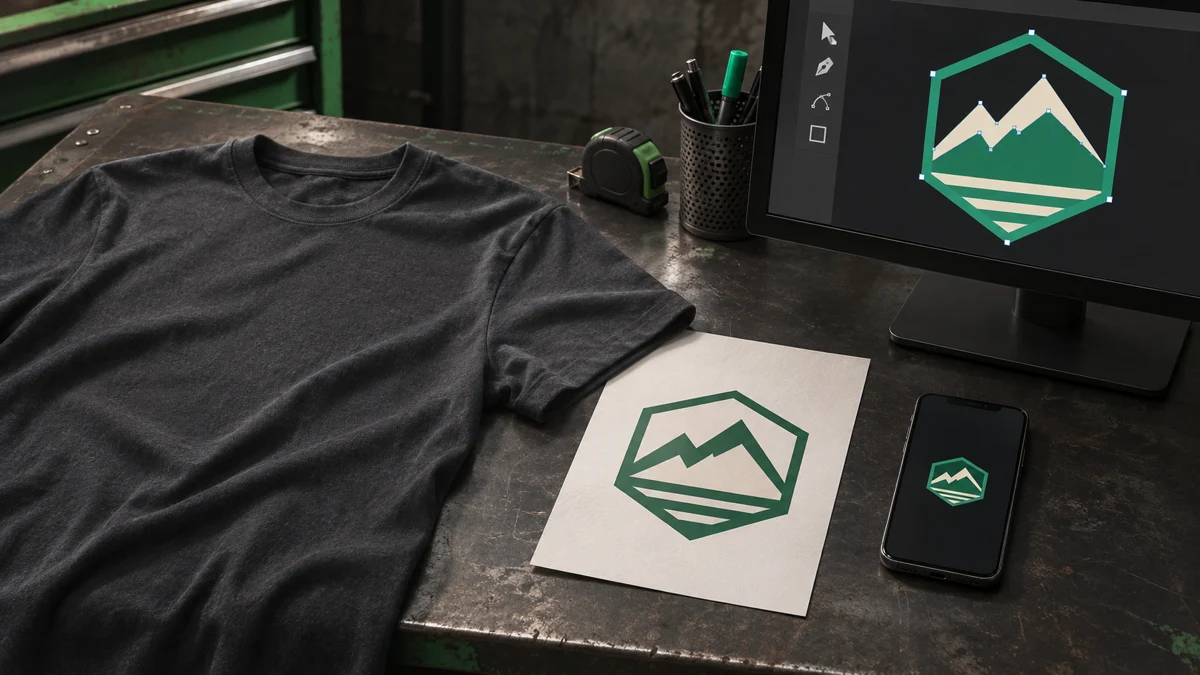
Consider a business ordering crew shirts. The logo comes from a screenshot of the company website. It looks sharp on the phone, so it seems ready for a full-back print.
The challenge is scale. A small preview can hide limitations that become visible when the artwork gets larger. Before choosing how to decorate the shirt, it helps to understand what is actually in the file.
What changes when a logo gets bigger?
Pixel-based artwork is a picture made of tiny colored squares. Screenshots, JPEGs, and PNGs work this way. Think of a mosaic: it looks smooth from a distance, but up close you can see the individual squares. Make a small image much bigger, and your logo can start to look blurry or blocky.
Vector artwork is made of shapes that stay sharp when resized. Think of letters you type: you can make them bigger and their edges still look clean. A vector logo works much the same way, whether it goes on the chest of a polo or across the back of a shirt.
Both types can work for apparel. Photos are pixel-based and can print well when the original image is large and clear enough. For logos, vector artwork usually gives us more flexibility. Not sure which you have? Send us your best file—we can check it for you.
The file extension is only a clue
Saving a screenshot inside a PDF does not rebuild the logo. A PDF can contain vector artwork, pixel-based images, or both. The contents matter more than the letters after the filename.
If you have the original file from your designer, send it along. Include any brand color references and explain where the artwork should appear. A small chest mark and a large back graphic are different applications, even when they use the same logo.
How Nuclear can help
Artwork refinement is part of Nuclear Printing’s work. For a project like this, the useful starting point is the logo, the garment, and the intended placement together. That gives us the context to recommend what needs attention before production.
Sometimes the next step is finding a better source file. Other artwork may need to be rebuilt or refined. The goal is to preserve the identity of the design while preparing it for the way it will actually be used.
Planning custom apparel? Send Nuclear Printing the best logo file you have and tell us what you want it printed on. We can help you move toward production-ready artwork.