DTF vs. Screen Printing: What Makes Sense for a Small Apparel Order?
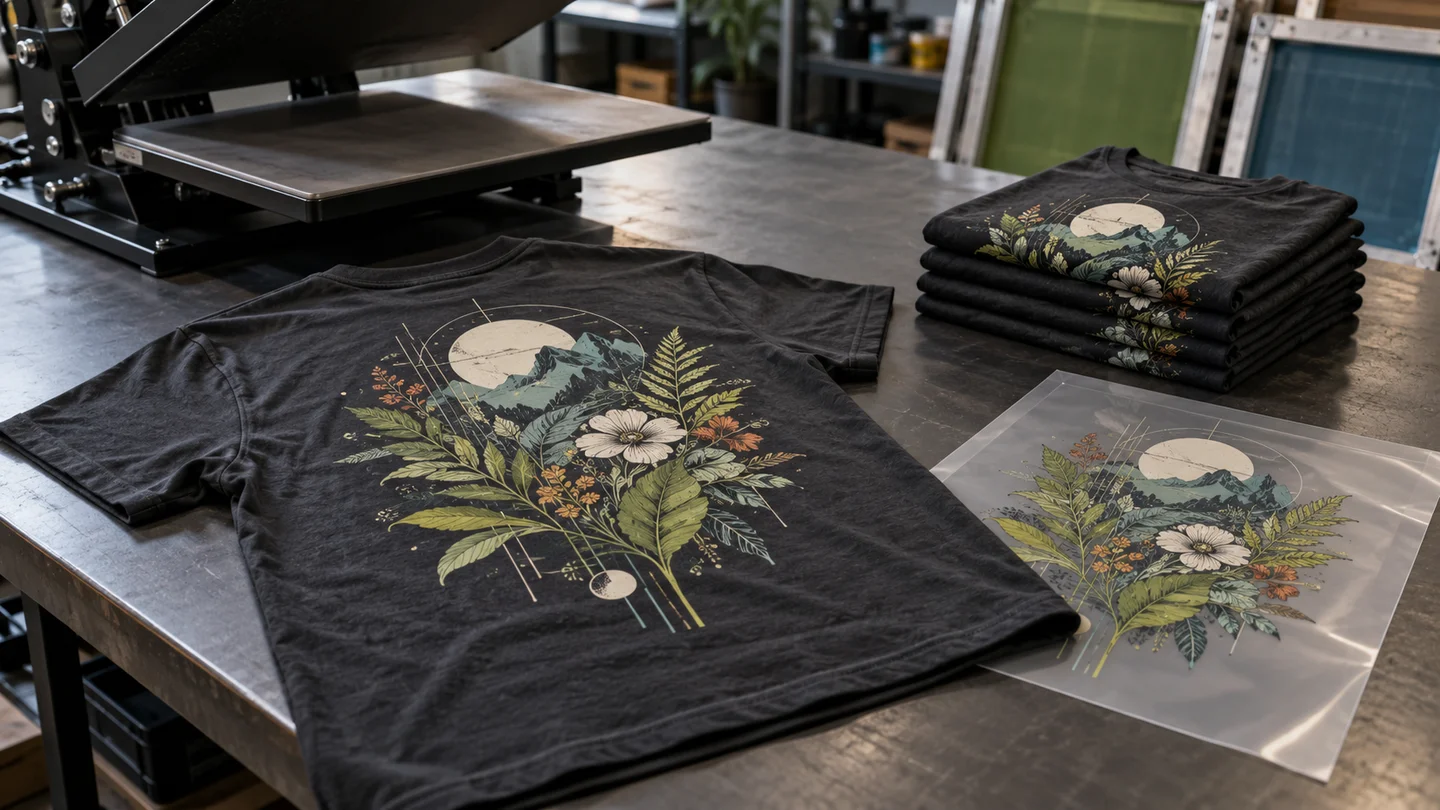
You need 24 shirts with a detailed graphic on the back, a smaller print on the front, and artwork on one sleeve.
The quantity is small, but the production requirements may not be. Color count, print locations, and garment choice all affect which decoration method makes sense.
At Nuclear Printing, this is the kind of project where we may recommend Direct-to-Film, or DTF printing.
Why Setup Matters
Screen printing requires screens to be prepared for the artwork’s ink colors. Additional print locations require their own setup.
That preparation supports consistent production, but its cost is spread across the number of garments ordered. A detailed design across several locations can involve considerable setup for just 24 shirts.
DTF uses digitally printed transfers applied with a heat press. It handles full-color graphics without requiring a separate screen for each ink color, making small, detailed orders more practical.
Multiple placements still involve additional work. The advantage is that you do not have to simplify every graphic just to reduce screen preparation.
Where DTF Fits
DTF is useful for small runs, detailed graphics, jersey names and numbers, and individual custom pieces. At Nuclear, DTF orders have no minimum quantity.
It can also help evaluate artwork size and placement on a sample. However, a DTF sample will not show the exact feel or appearance of a final screen print.
When Screen Printing Makes Sense
Small quantities do not automatically mean DTF.
A simple design or a particular ink finish may make screen printing worth considering. As quantities increase, producing the same artwork across a longer run can make screen printing more economical per piece.
We look at the complete project rather than choosing by quantity alone.
Start With the Details
Neither method fixes blurry artwork or makes every garment suitable for every application. Fine details, fabric, print size, and placement still need consideration.
Send your quantity, artwork, preferred garments, print locations, and deadline. Include any personalization or plans to reorder.
Nuclear Printing can help you choose a production method that fits the project.